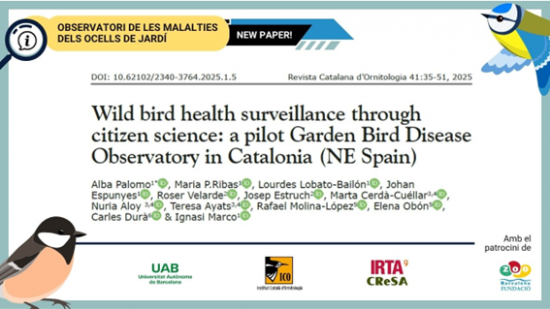
A recent study published in the Revista Catalana d’Ornitologia analyses the potential of regular garden bird observations on ornitho.cat to describe and interpret the health status of birds in urban habitats, investigate the causes of mortality, and identify risk factors in order to facilitate mitigation measures.
The study is based on data collected from various sources of information on the health status of garden birds, including direct communications to the authors, admissions of birds to wildlife rehabilitation centres, and observations of birds reported through the mortality module of ornitho.cat. Thanks to citizen participation, this module records the presence and abundance of birds showing some type of health impairment.
Using these data, the authors assess the ability of such programs to detect changes in bird populations by analysing temporal patterns and regional variability. Rapid response, good feedback to observers, and consistent dissemination over time were key to ensuring citizen participation.
These data allowed the detection of outbreaks of Newcastle disease/Orthoavulavirus 1 (NDV), as well as isolated cases of salmonellosis, mycobacteriosis, coligranulomatosis, knemidocoptic mange, fungal pneumonia, and septicemia. Other relevant findings included nephropathy, feather cysts, nutritional hyperparathyroidism, tick infestations, hemosporidian infections, endoparasitosis (trematodes, nematodes, cestodes, and coccidia), and beak deformities, in addition to other causes of mortality such as window collisions, road kills, and predation.
Understanding the causes of mortality is a key tool for conservation, as it helps identify vulnerabilities in specific species and enables targeted actions where appropriate. In this context, there are still few regular information systems on diseases affecting common birds (or garden birds), which are essential for understanding their population dynamics and the impacts these diseases may have on avifauna.
This study is therefore highly relevant and opens the door to improving information management systems based on citizen-collected observations. It highlights the importance of creating and maintaining data collection and management infrastructures that integrate volunteer observations with scientific research. In this context, platforms such as ornitho.cat facilitate this integration and contribute to generating valuable long-term datasets for research and conservation.
How to record observations of dead, injured, or sick animals
Anyone can contribute to these types of projects by submitting their bird observations. Through ornitho.cat, it is possible to easily record sightings and help generate scientific knowledge useful for conservation. Simply tick the “Dead or injured animal”box and complete the mortality module form, either via the website or the NaturaList app.
Data from ornitho.cat are directly linked to the relevant authorities working with these data at the local level, allowing for a rapid response. In addition, the mortality module helps standardize the way mortality data are collected.
You can read the full article here.


 Sightings
 Stats
Stats